Kazakhstan in 10 days: Almaty, the Silk Road & the Mangystau desert by 4x4
Itinerary

Kazakhstan in 10 days: Almaty, the Silk Road & the Mangystau desert by 4x4

  • 10 days
  • 23 stops
  • Nov 2026

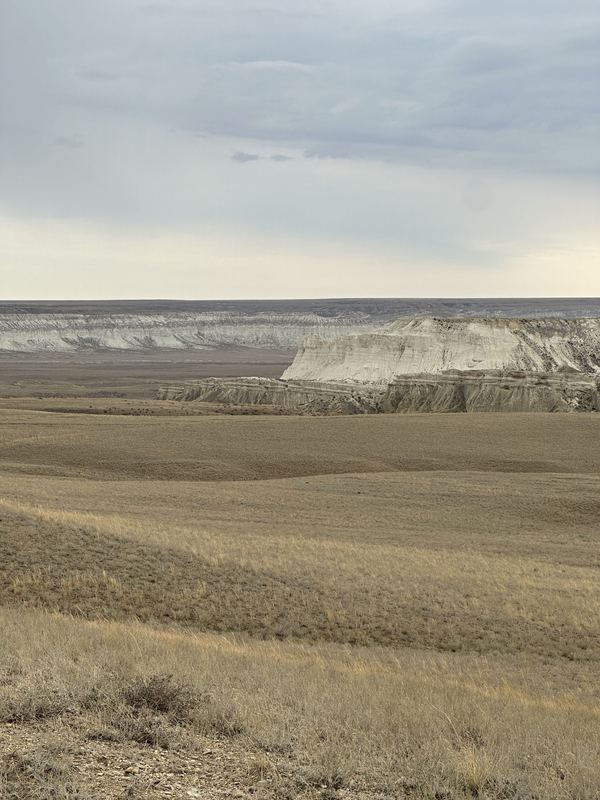
Mangystau is the primary reason I chose to visit Kazakhstan. A region in the far west, on the Caspian Sea, largely unknown to mass tourism, with canyons, white chalk mountains and stone spheres scattered across an ancient seabed. Only a few thousand tourists go each year, and out there it is easier to come across a camel than another human being.

But Kazakhstan surprised me well before the desert. In the first days we had red canyons, turquoise lakes and a drowned forest in the Tian Shan mountains, and then the Silk Road with its caravan cities and the most sacred place in the country. Ten days, four very different Kazakhstans.

A hidden gem, for now. Most people I know could not place Mangystau on a map. That is exactly why you should go now.

Before you book · the route, getting around & when to go

Ten days across Kazakhstan, from Dubai to Dubai: the mountains, canyons and lakes around Almaty, the Silk Road cities of the south, and three days by 4x4 through the Mangystau desert, sleeping in a yurt and in a tent. We went in August 2024, and the prices, tours and practical tips are checked for 2026.

How it fits together: Dubai → Almaty by plane · Almaty → Saty and back by van · Almaty → Shymkent by night train · Shymkent → Turkestan by road · Shymkent → Aktau by plane · Mangystau by 4x4 · Aktau → Dubai by plane.

How we travelled. We travelled with an organised group. If you travel on your own, Almaty and the south are easy to do with day tours, but for Mangystau you need a 4x4 with an experienced local driver: there are no roads, no signs and no phone signal.

When to go. Spring (April to June) and autumn (September and October) are the most comfortable months. In summer the desert gets very hot by day, while the mountain mornings stay cold all year, so pack layers.

2 stops · swipe or tap a card

Arrival

Almaty

The old capital under the mountains

Arriving from Dubai

Almaty was the capital of Kazakhstan until 1997 and is still its largest city, with the snowy peaks of the Tian Shan right behind the buildings.

Ascension Cathedral

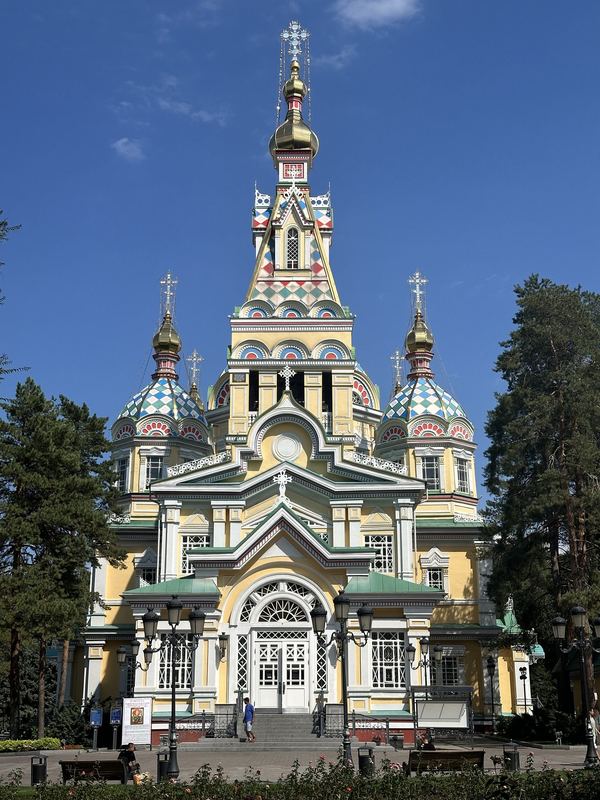
Our first stop was in Panfilov Park, in front of the Ascension Cathedral: a pastel wooden church completed in 1907, 56 metres tall and built without nails. It is said to be one of the tallest wooden churches in the world, and it came through the great earthquake of 1911 with only minor damage.

Green Bazaar

Then the Green Bazaar, the oldest and largest market in Kazakhstan: dried fruit, spices, cheese, horse meat and plenty of tastings.
Sunset

Kok Tobe

Almaty from above

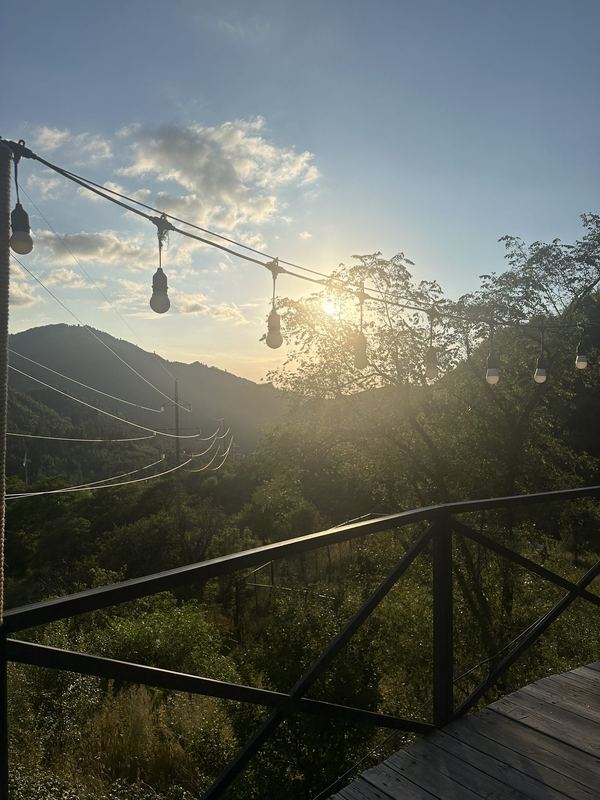
We ended the day with a cable car ride up Kok Tobe hill at sunset, to see the whole city from above with the mountains turning pink behind it.

2 stops · swipe or tap a card

Morning

Charyn Canyon

The Valley of Castles

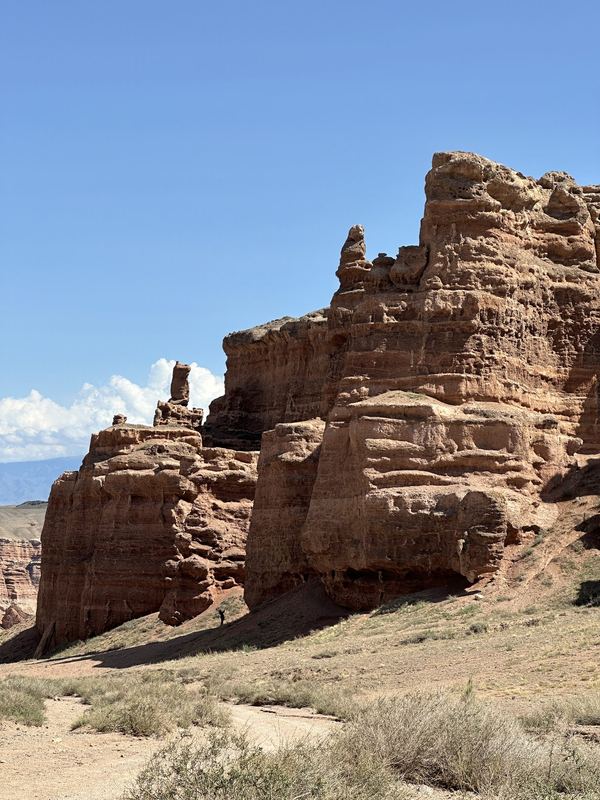
A few hours east of Almaty, the Charyn river has cut a canyon that stretches for about 154 kilometres, with rock formations up to 12 million years old. The most beautiful part is the Valley of Castles, a walk between red walls shaped like towers and fortresses. It is often compared to the Grand Canyon in the US.

Book what I booked

GetYourGuide 5% off every tour with my code LINECCEPIBILE5

Afternoon

Kolsay Lakes

The Pearls of the Tian Shan

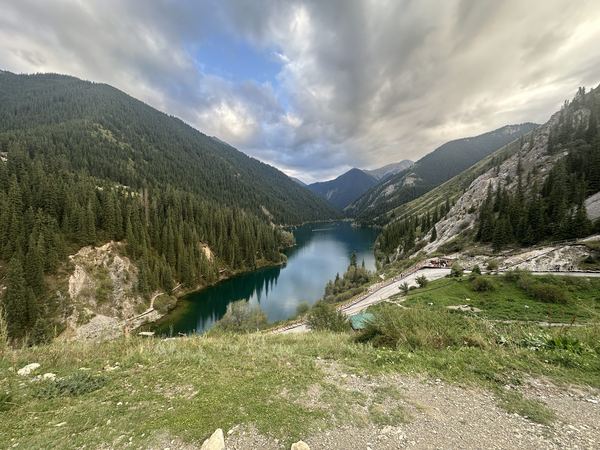
Known as the Pearls of the Northern Tian Shan, the three Kolsay lakes sit at about 1,800, 2,250 and 2,850 metres. We walked along the lower lake, surrounded by spruce forest and mountains. The lakes are popular for hiking, camping and boating, and in summer there are wild raspberries and blackberries along the paths.

Where we slept

That night we slept in a guesthouse with a local family in the village of Saty, with a home cooked dinner.

Did you know?

  • Walking between the three lakes takes about five hours.
  • You can explore the lakes before you go with the national park's virtual tours, made with 3D panoramas and aerial shots.
  • Snow leopards live in these mountains. The park's camera traps have filmed a mother with her cub near the lakes.

1 stop · swipe or tap a card

Morning

Kaindy Lake

The sunken forest

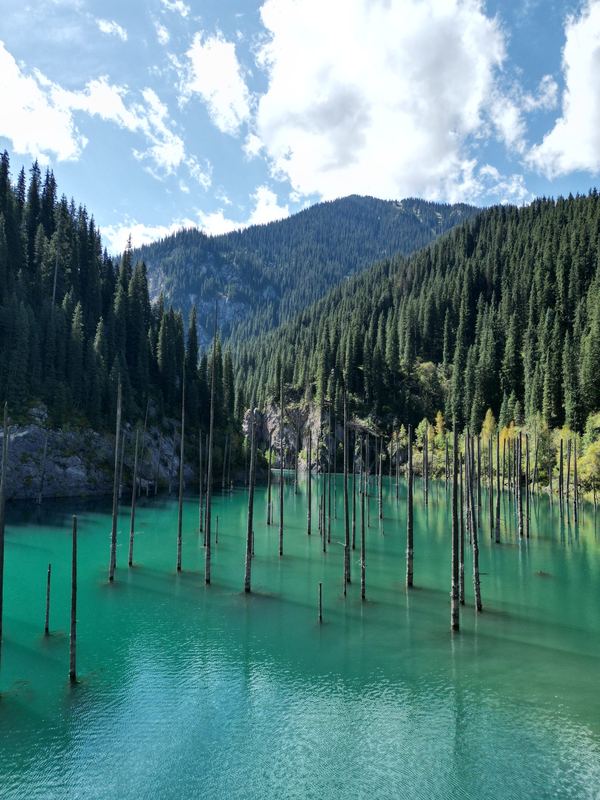
Good morning from Saty! From Saty we took one of the old Soviet UAZ vans up the bumpy track, then walked down through the forest to the shore. Kaindy is the most surreal lake I have ever seen. It was formed by the 1911 earthquake, when a landslide blocked the gorge and the valley filled with water. The spruce trees were drowned where they stood, and today their bare trunks rise straight out of the turquoise water, while under the surface the forest is still there.

Back to Almaty

In the afternoon we drove back to Almaty for the night.

Want a preview? The national park has a free virtual tour with drone panoramas of Saty and 360° views of Kaindy Lake.

Book what I booked

GetYourGuide 5% off every tour with my code LINECCEPIBILE5

1 stop · swipe or tap a card

Morning

Big Almaty Lake

A turquoise lake at 2,500 metres

Trekking day! The trail to Big Almaty Lake is about 8 kilometres and takes around three hours. The lake sits at 2,511 metres, surrounded by snowy peaks, and it is a natural reservoir that supplies water to Almaty. We had a picnic in the alpine meadows above the lake. The shore itself is now fenced off, and swimming is not allowed: it is the city's drinking water.

Did you know?

  • The turquoise colour comes from the minerals carried down by the glaciers.

The night train south

Back in Almaty, we got on the night train to Shymkent, in the south of the country.

Book what I booked

GetYourGuide 5% off every tour with my code LINECCEPIBILE5

3 stops · swipe or tap a card

Morning

Shymkent

A caravan city on the Silk Road

The night train dropped us in Shymkent, the third largest city in Kazakhstan. It was a caravan stop on the Silk Road, and it still has that energy: busy bazaars and a lively atmosphere.

Independence Park

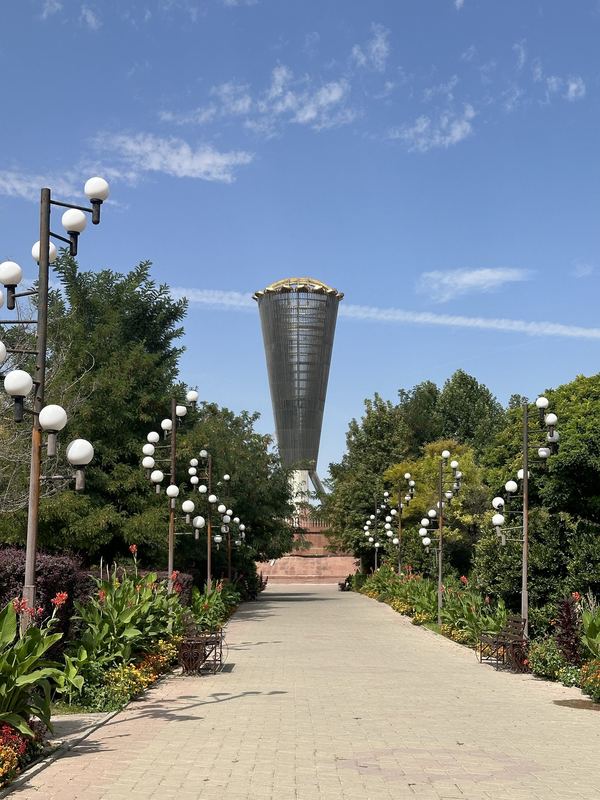
Long alleys of flowers and fountains lead to the Altyn Shanyraq, a tall monument made of 137 metal pieces, one for each of the nationalities living in Kazakhstan. The park opened in 2011 for the 20th anniversary of independence.

The Glory memorial

In Abay Park, two tall steel steles lean on each other above the eternal flame, a symbol of the unity of the front and the home front in the Second World War.

Did you know?

  • The good most traded along this route was, of course, silk.

Midday

Arystan Bab Mausoleum

The first stop of the pilgrimage

On the way to Turkestan we stopped at the mausoleum of Arystan Bab, the spiritual teacher of Khoja Ahmed Yasawi. Tradition says pilgrims should visit him first, before going to Turkestan. The ruins of Otrar, the Silk Road city destroyed by Genghis Khan's army in 1219, are right next to it.

Book what I booked

GetYourGuide 5% off every tour with my code LINECCEPIBILE5

Evening30 min show

Karavansaray & Altyn Samruk

Turkestan after dark

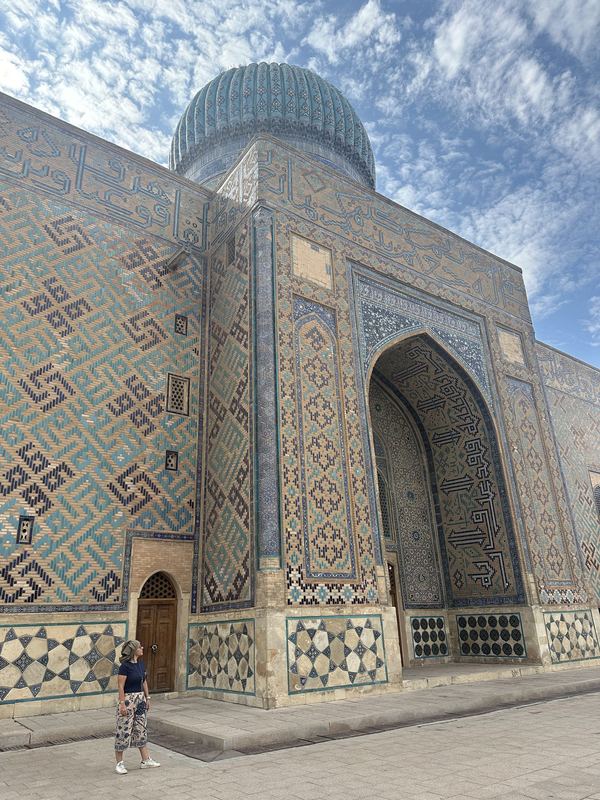
We reached Turkestan in the late afternoon and had our first look at the mausoleum at sunset, its turquoise domes glowing above the old walls. Right next to it is the Karavansaray, a new tourist complex built in the style of a Silk Road caravan stop, with canals, shops and restaurants, and local women in the white kimeshek headdress sitting on carpets in the square.

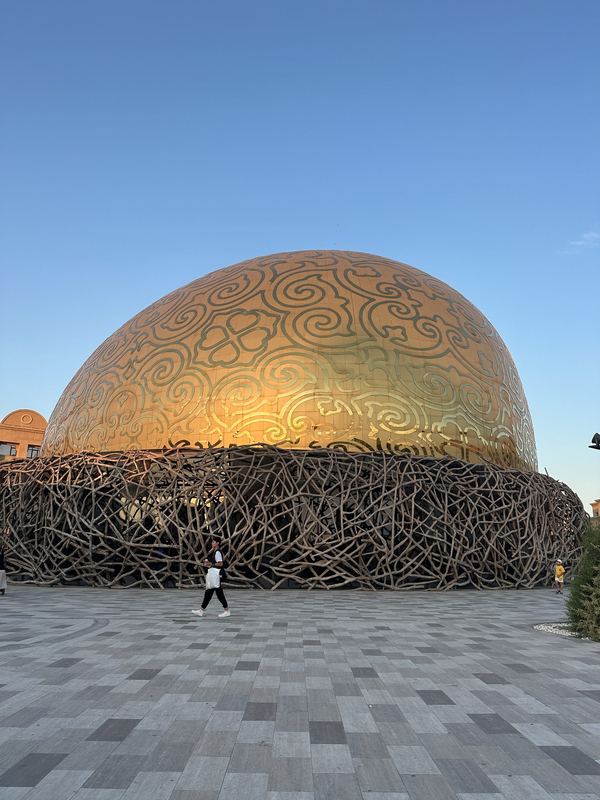
The only immersive experience of our trip, and a fun one. Inside the Karavansaray complex, next to the mausoleum, there's a building shaped like a giant golden egg in a nest, from the Kazakh legend of Samruk, the mythical bird. Inside is a flying theatre: you sit strapped in a seat that lifts and tilts in front of a huge dome screen, and Samruk takes you on a flight over the whole country, from the Caspian Sea to the Charyn Canyon, the Kolsay lakes, the mountains and the steppe. A nice way to see from above the places we had just visited, and a preview of the Caspian that was waiting for us.

Shows run every half hour and last about 30 minutes. Tickets are 6,500 tenge for adults.

1 stop · swipe or tap a card

Morning

Mausoleum of Khoja Ahmed Yasawi

The turquoise dome

We came back the next morning to see it properly, inside and out.

The most sacred place in Kazakhstan. Timur ordered this mausoleum at the end of the 14th century for the Sufi poet Khoja Ahmed Yasawi, but it was never fully finished: you can still see the bare brick portal at the entrance. Its turquoise dome is one of the largest in Central Asia, and the architecture will remind you of Samarkand and Bukhara in Uzbekistan. It is a UNESCO World Heritage Site.

Did you know?

  • You can walk around the mausoleum before you go: the Lublin University of Technology digitised it as 360° panoramas, also viewable with 3D glasses.

On to the Caspian

Then back to Shymkent for lunch and a flight across the country to Aktau, on the Caspian Sea, our gateway to Mangystau.

Book what I booked

GetYourGuide 5% off every tour with my code LINECCEPIBILE5

6 stops · swipe or tap a card

Morning

Zhygylgan

The Fallen Land

Into the desert

Our road trip in a 4x4 through the Mangystau region began in Aktau. This is a place you can only explore with experienced drivers and guides, and they gave us three days of adventure and breathtaking landscapes. Of course, from here on there is no network coverage.

After a couple of hours' drive from Aktau we were in the Mangystau region, with wind and a light rain to welcome us. Out here every turn is a surprise.

Zhygylgan, the Fallen Land

Zhygylgan, the Fallen Land, is a huge crescent shaped cliff where a whole slab of the plateau collapsed, a block about 2 by 4 kilometres. At the bottom, on the fallen rocks, you can still see the fossil footprints of animals that walked here millions of years ago, tigers and gazelles among them.

Book a 3 day jeep tour Or take 4 days

GetYourGuide 5% off every tour with my code LINECCEPIBILE5

Midday

Shakpak Ata

A mosque inside the rock

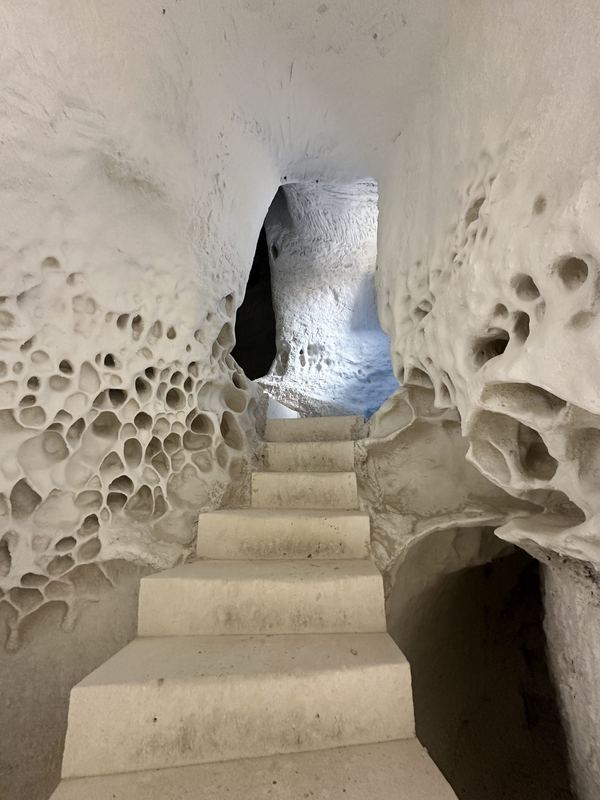
An underground mosque carved into the soft limestone, with a necropolis in front of it, and one of the oldest in Mangystau. In July 2026 Shakpak Ata and four other rock mosques of Mangystau, Beket-Ata, Shopan-Ata, Karaman-Ata and Sultan-Epe, became a UNESCO World Heritage Site.

Afternoon

Kapamsay Canyon

The White Canyon

A rugged canyon with walls up to 100 metres high and striking white rock formations. It is so remote that we had it almost to ourselves, and there is a big yellow frame on the edge for the classic group photo.

Afternoon

Torysh, the Valley of Balls

Giants' marbles in the steppe

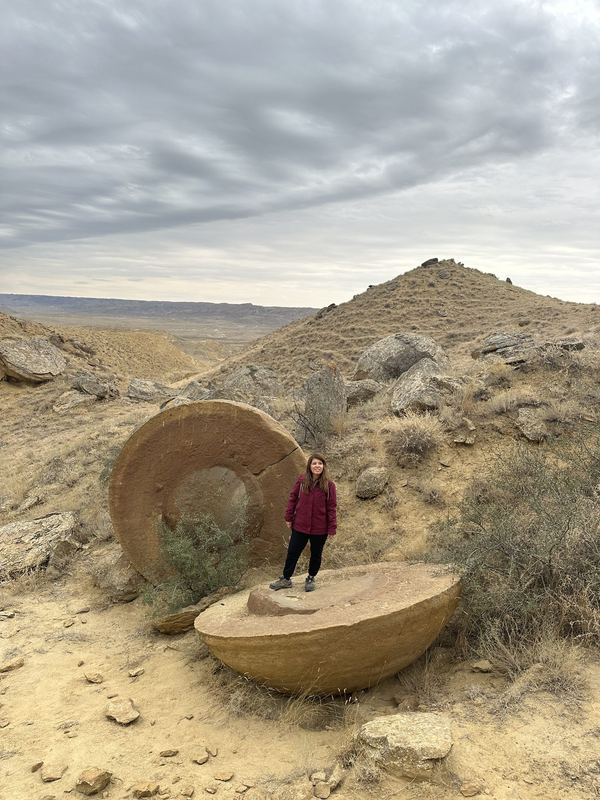
Hundreds of stone spheres scattered across the steppe, some up to 3 metres wide. Geologists say they are tens of millions of years old: they formed on the floor of the ancient Tethys Ocean, as minerals built up in layers around a shell or a shark tooth.

A local legend has a better story: an army of invaders descended on Mangystau like locusts, the locals prayed for help, and their prayers were answered with storms, thunder and lightning that turned the invaders to stone in an instant.

Seen from the drone, they are everywhere. Many, many balls!

Then, after another corner, a dry lake bed cracked into perfect tiles, and from the edge of the plateau a view all the way to the Caspian Sea.

Sunset

Sherkala

The Lion's Castle

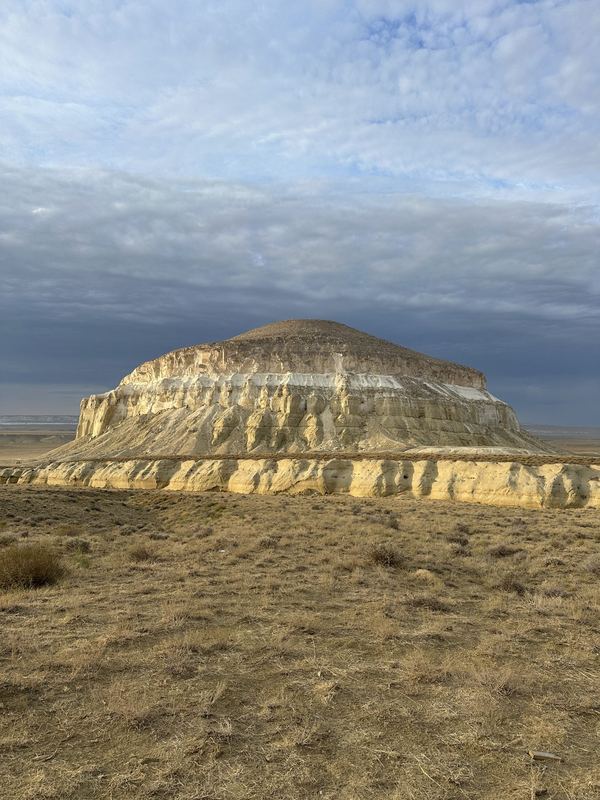
Sherkala, the Lion's Castle, is a lone mountain rising about 300 metres above the steppe. From one side it looks like a giant yurt, and from the other like a sleeping lion.

We got there just before sunset, with the light turning the stripes of the mountain gold.

Night

Kogez yurt camp

My first night in a yurt

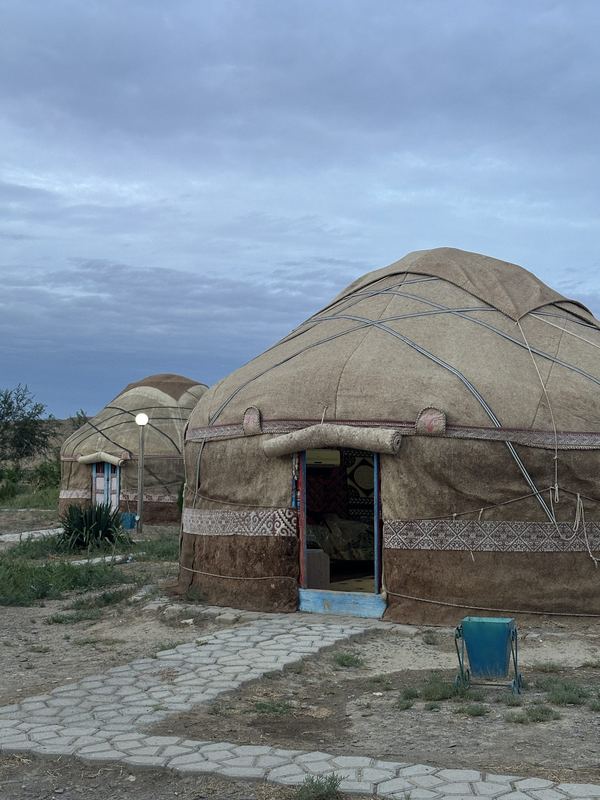
At the end of the day we reached the ethnic village of Kogez, to spend the night in traditional Kazakh yurts. It was my first time sleeping in a yurt, so I was quite excited.

4 stops · swipe or tap a card

Morning

Airakty, the Valley of Castles

Castles carved by the wind

Buongiornissimo! Breakfast in Kogez came in very fancy cups. In a week I think we ate the eggs we should eat in a month.

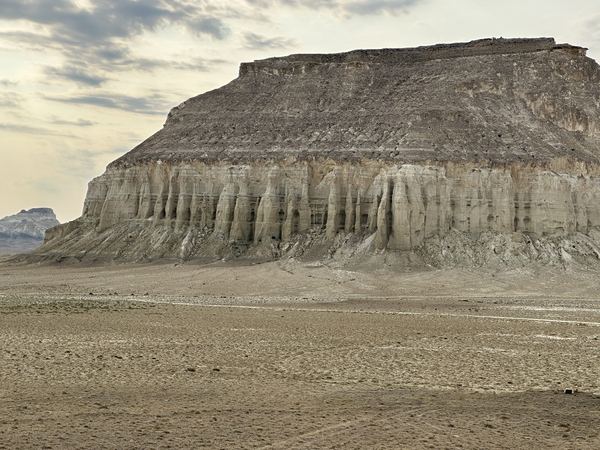
A few kilometres east of Sherkala, Airakty is a group of flat topped mountains whose steep walls are so deeply grooved that they look carved by hand, like the towers of a castle. Camels graze at their feet and lone peaks rise from the steppe all around. The Ukrainian poet Taras Shevchenko, exiled here in the 1850s, sketched these mountains in 1851 and named them the Valley of Castles.

Midday

Ustyurt Plateau

An ancient seabed

A plateau of about 200,000 square kilometres stretching from Kazakhstan into Uzbekistan. It is hard to believe, but the entire plateau was once covered by the Tethys Ocean, and you can still pick up fossils from the ground: I found a fossil sea urchin in my hand. On the way we stopped in a small village to refuel and for a quick lunch, a big bowl of meat and vegetable soup.

Afternoon

Tuzbair salt lake

The desert mirage

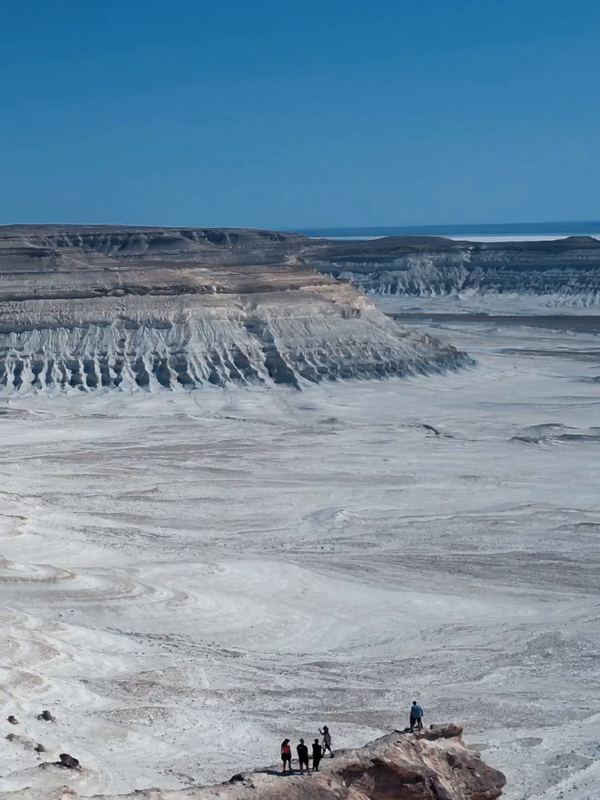
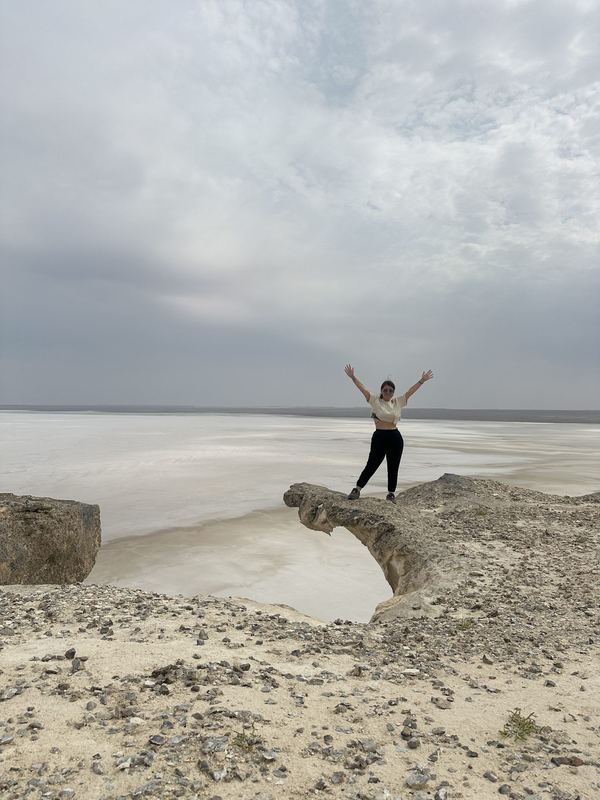
Definitely one of the best spots. Tuzbair is a dry salt lake with stunning white shores under white cliffs and arches. It's huge and really impressive. The salt is so concentrated that, seen from above, the white soil creates a small mirage: the lake looks full of water even in summer.

After the view from the top it took us an hour's drive to reach the bottom, and down there we were literally in the middle of nowhere, and loving it. Walk carefully: every now and then the salt crust breaks and you sink into the mud underneath.

Night

Tent camp at Tuzbair

Sleeping on the salt lake

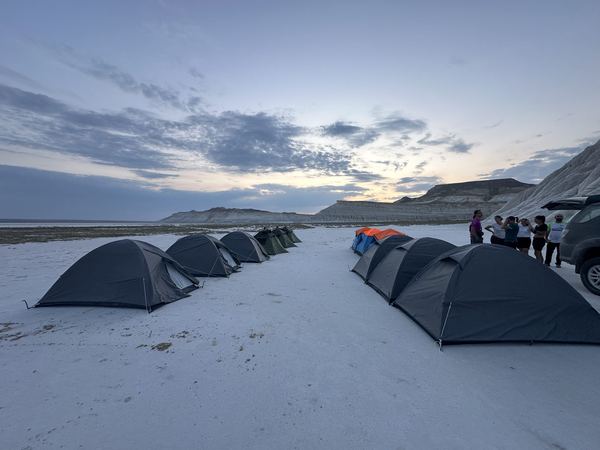
While we were taking all possible pictures of this incredible place, the guides set up our tents at the foot of the cliffs and cooked a tasty beef plov under the stars. My usual very important check before zipping up the tent: making sure I'm not sleeping with unwelcome guests. I'd missed camping!

Waking up to this view the next morning is priceless: sunrise over the salt, breakfast in the open, then one last walk on the white lake bed before the drive.

2 stops · swipe or tap a card

Morning

Boszhira

The fangs of Mangystau

Last day in Mangystau, with a long drive ahead and more iconic spots before going back to Aktau.

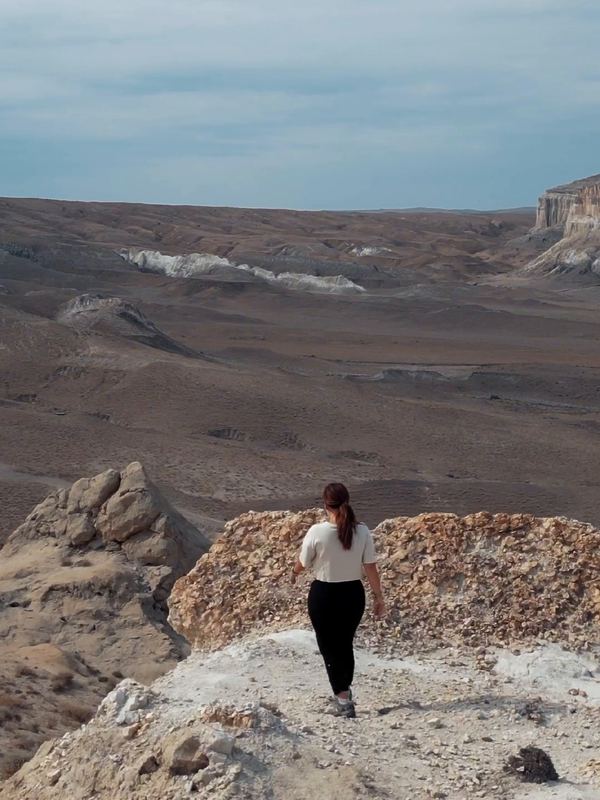
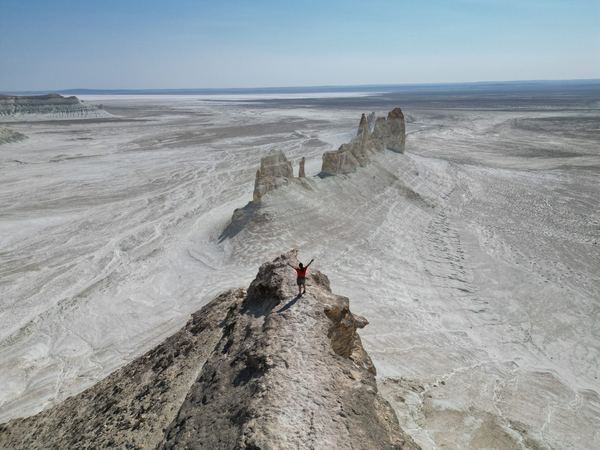
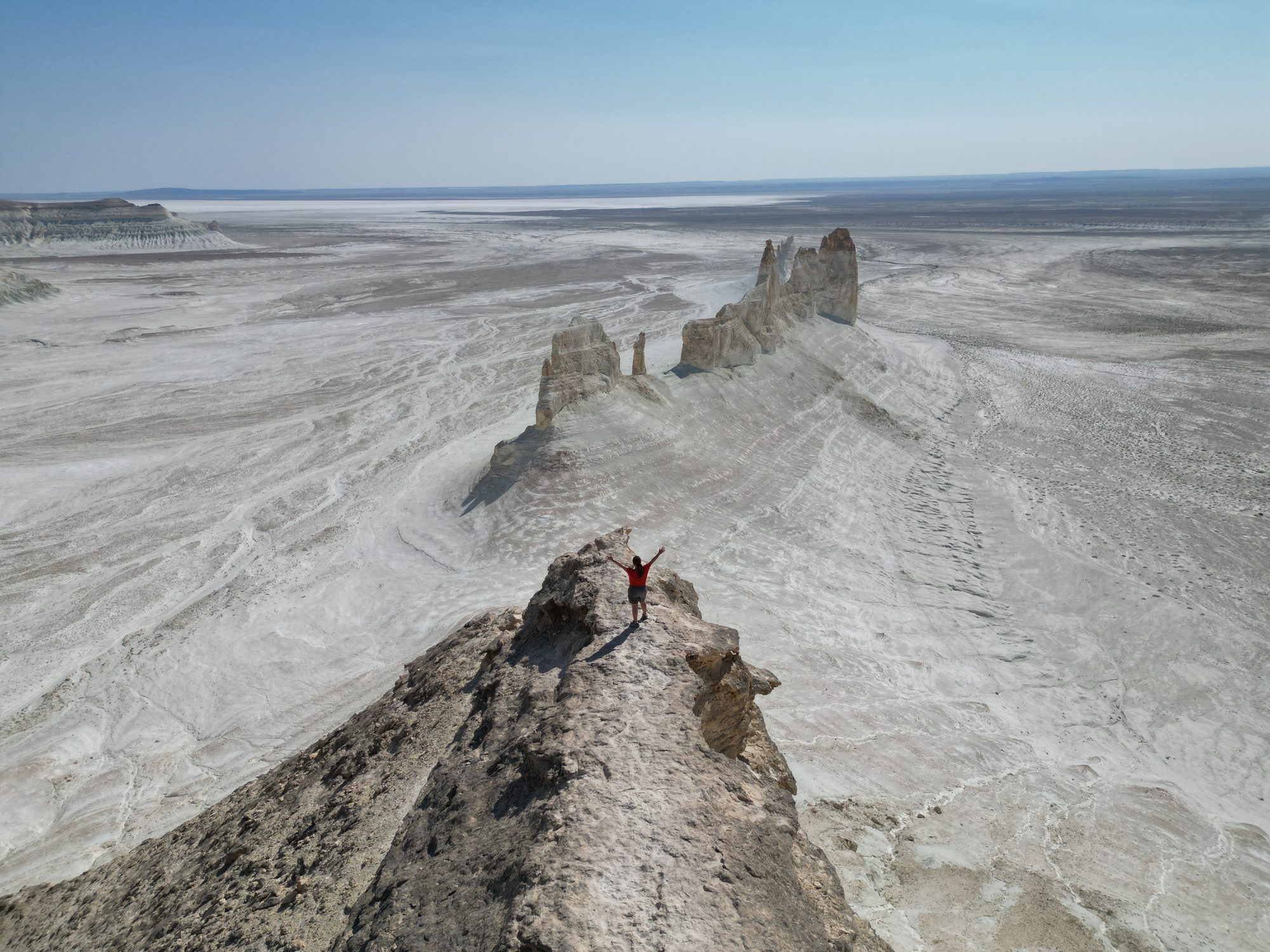
The most famous view in Mangystau, and for me the most spectacular: white chalk peaks rising from the plateau like a lunar landscape. The area is full of fossils, a reminder that it was once a seabed. The mountains have their own names: the Yurt, the Castle and the Twin Towers, the two fangs you see in every photo. Infinite spaces that make you feel microscopic. Mangystau, I knew you wouldn't disappoint me.

Book what I booked

GetYourGuide 5% off every tour with my code LINECCEPIBILE5

Afternoon

Tiramisu Hills

Cream and cocoa

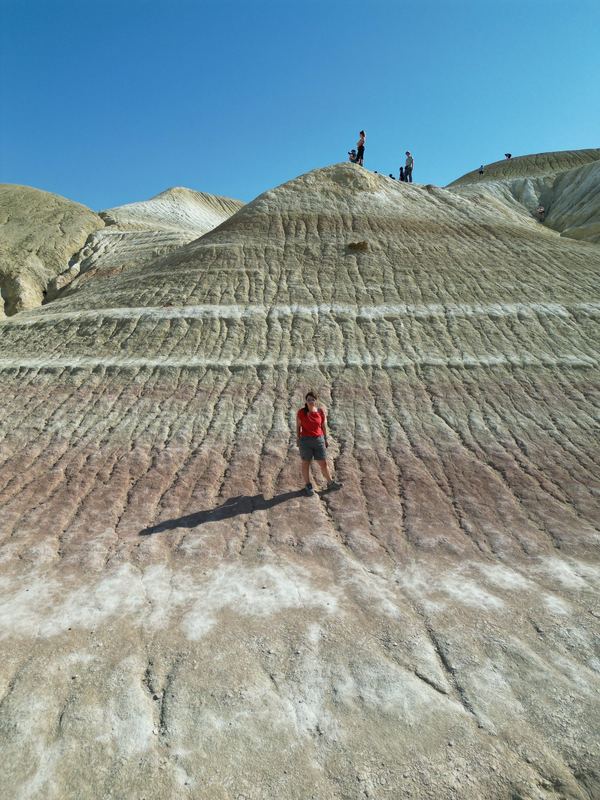
About 80% of Mangystau is off road, so you'd better like it a bit bumpy. The Kyzylkup hills are nicknamed Tiramisu for their layers of cream and cocoa: the white layers are chalk and the red ones contain iron. To me it looked more like a strawberry tiramisu.

Mangystau has amazing landscapes, and it went directly into the top three of my favourite places in the world.

Then the long drive back to civilisation in Aktau, for our last night in Kazakhstan.

Book what I booked

GetYourGuide 5% off every tour with my code LINECCEPIBILE5

1 stop · swipe or tap a card

Morning

Aktau

Back to Dubai

A very early flight from Aktau back to Dubai.

Good to know

How many days do you need for Kazakhstan?

Ten days lets you see the three regions: three days around Almaty for the canyons and lakes, two days on the Silk Road between Shymkent and Turkestan, and three days in the Mangystau desert, plus the travel days. With less time, pick Almaty and Mangystau.

Can you visit Mangystau without a tour?

Not really. Most of the sights are reached on dirt tracks across the desert, with no signs and no phone signal. Go with a 4x4 and a local driver who knows the area, either on a group trip or a private jeep tour from Aktau.

How do you get from Almaty to Mangystau?

By plane. Aktau, on the Caspian Sea, is the gateway to the Mangystau region. We flew there from Shymkent after visiting Turkestan.

Is the Almaty to Shymkent night train comfortable?

It is a simple sleeper train that leaves Almaty in the evening and arrives in Shymkent in the morning, so you save a night in a hotel and a full day of travel.

Good to know

Layers. Mountain mornings are cold, the desert is hot by day and chilly at night. In the tent night you will want a warm jumper.

No signal in Mangystau. For three days there is little or no network, and no shops once you leave Aktau. Download offline maps, stock up on snacks and water in Aktau, and warn your family you will be offline.

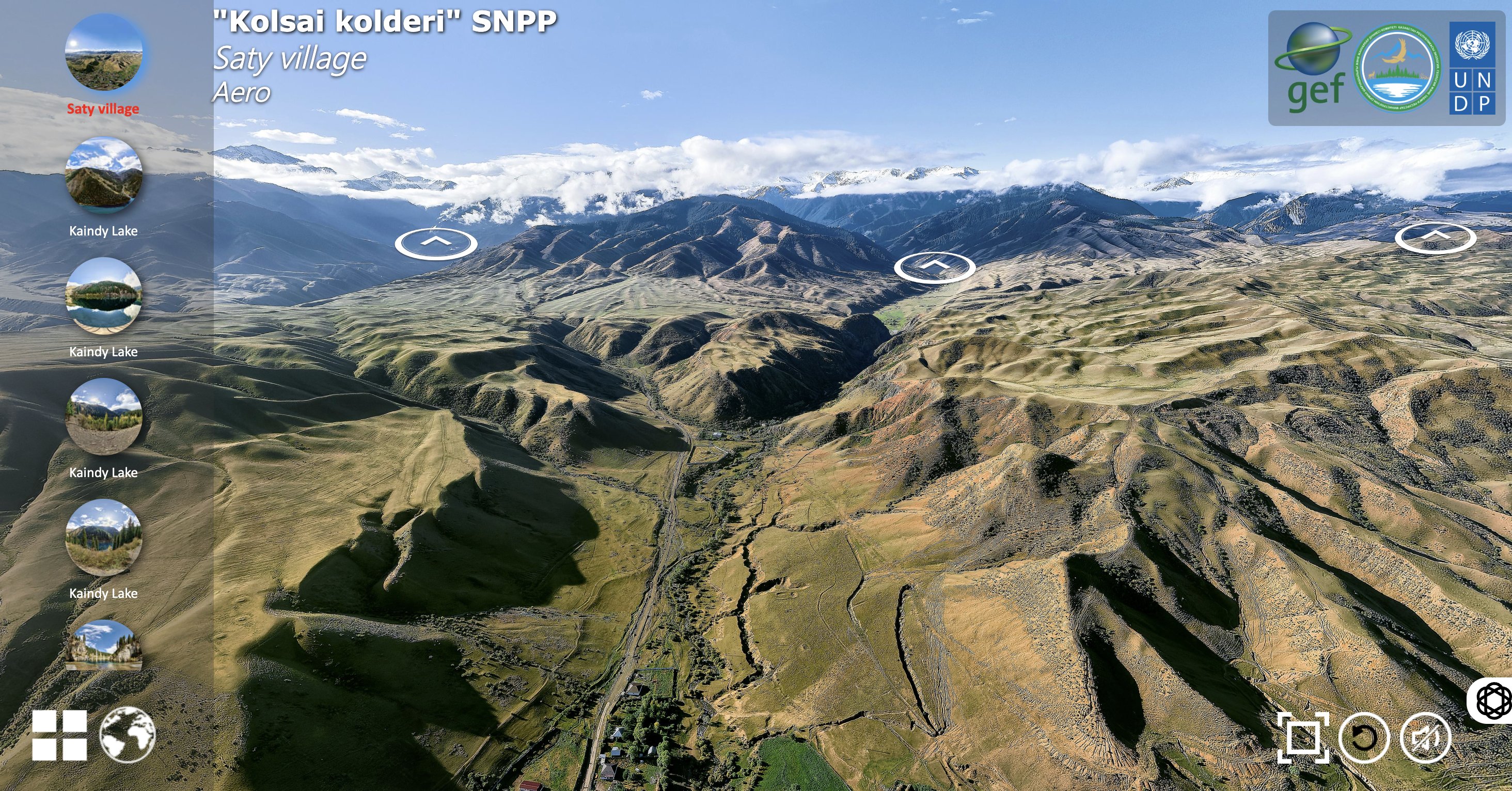
Immersive Kazakhstan. A few ways to explore it through a screen, before or during the trip. The Kolsai Koldery National Park has virtual tours with 3D panoramas and aerial views of the lakes and trails, made with UNDP. The Yasawi mausoleum in Turkestan can be explored in 360° panoramas. In Turkestan itself, the Altyn Samruk flying theatre takes you on a virtual flight over the whole country. And the Big Dream Lab AR books, read through the free Big Dream app, include one about Astana, the capital, with 4D animations popping out of the pages.

The Kolsai Koldery virtual tour: an aerial 360 view of the Saty valley, with panoramas of Kaindy Lake
The Kolsai Koldery virtual tour: fly over Saty village and jump into 360° panoramas of Kaindy Lake and the Kolsai Lakes before you go.

Some links in this post are affiliate links. If you buy through them I may earn a small commission, at no extra cost to you.

NextSouth Korea Travel Guides: Which One Is for You?